Loading...
Serving Moline, IL and surrounding areas. (309) 581-0445
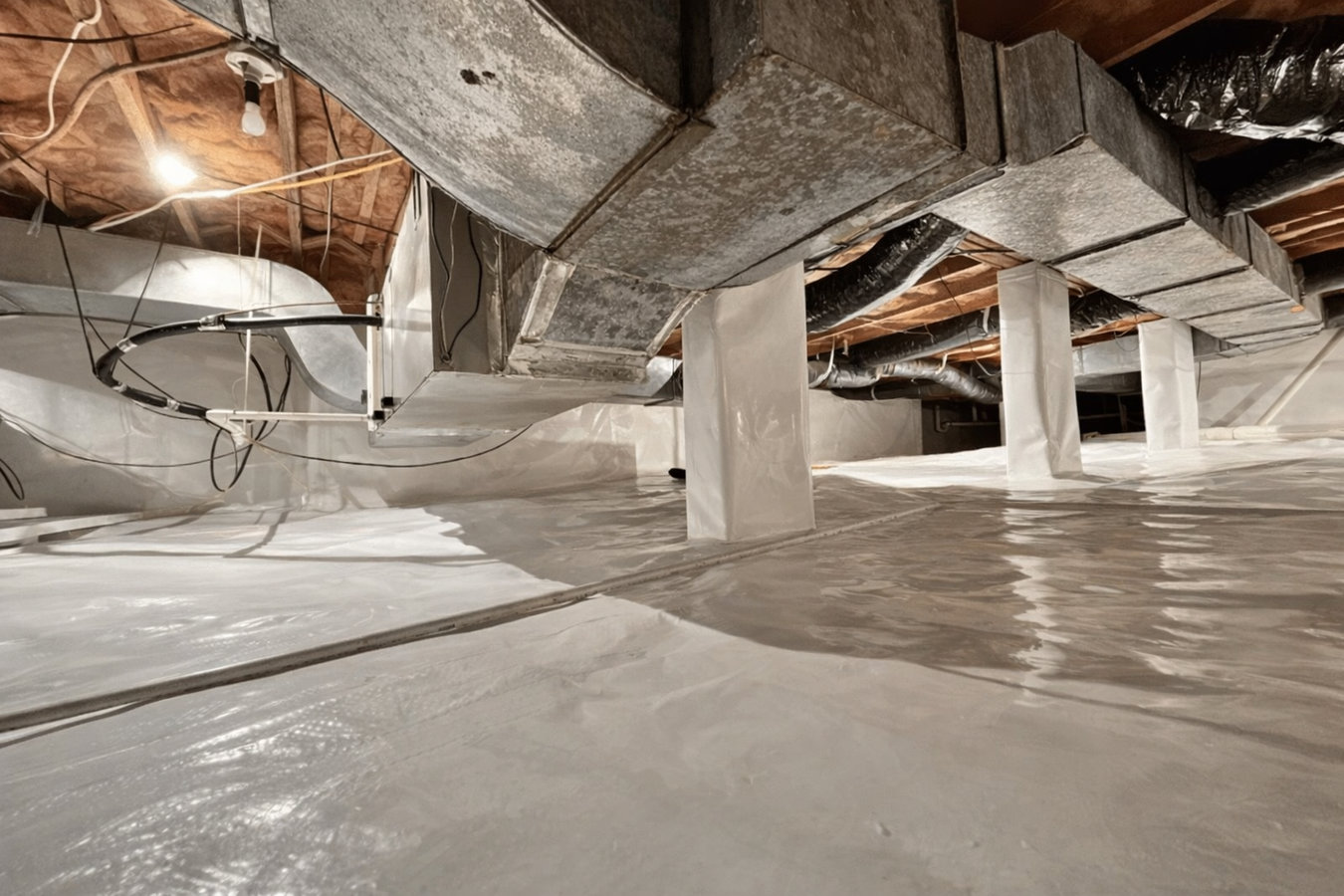
Ground moisture rising through your crawl space leads to mold, wood rot, and cold floors. A properly installed vapor barrier seals that path off before the damage compounds.
A crawl space vapor barrier in Moline, IL is heavy plastic sheeting laid across the bare dirt floor of your crawl space to block moisture from the ground from rising into your home - most jobs on a typical Moline home take one to two days. Without it, ground moisture moves freely up through the soil, into the air under your house, and eventually into your living space. The barrier cuts that path off at the source.
Moline sits along the Mississippi River, and the soil here stays wet for much of the year. Homes built before the 1970s - which includes a large share of Moline neighborhoods - were typically constructed with vented crawl spaces and no ground cover at all. If your home has never had crawl space work done, the ground underneath may have been exposed and damp for decades, quietly creating the conditions that mold, wood rot, and pests need to thrive.
Pairing a vapor barrier with proper crawl space insulation gives you both moisture protection and thermal performance below grade. The U.S. Department of Energy recommends sealing and insulating crawl spaces as one of the most effective ways to reduce energy use and moisture risk in homes with vented crawl spaces.
A damp, earthy smell on your ground floor or near the crawl space access is almost always ground moisture rising up. In Moline, this tends to be strongest in late winter and early spring when snowmelt saturates the soil. It is easy to dismiss as an old-house smell, but it is actually your home signaling something is wrong underneath.
Unusually cold floors in winter, or spots where the floor feels slightly soft or springy, can both point to moisture problems in the crawl space. In Moline's older homes, where floor joists may already be aging, prolonged moisture exposure can cause wood to soften over time. If a floor area feels different than it used to, it is worth having someone look underneath.
If you have ever looked into your crawl space and seen water droplets on pipes, wet or dark-stained soil, or any standing water after rain or snowmelt, moisture is not being managed. Moline's spring thaw and heavy rain events push water into crawl spaces quickly, and even small amounts of recurring moisture are enough to start mold growth within days.
Mice, insects, and other pests are drawn to damp, dark crawl spaces. If you have noticed pest activity - droppings, chewed materials, or sounds in the floor - and you have a crawl space, moisture is likely making that space attractive. A dry, well-sealed crawl space is a much less hospitable environment for pests.
We install heavy-duty plastic sheeting across the entire floor of your crawl space, overlapping every seam and running the edges up the foundation walls so there are no gaps where ground moisture can sneak through. The quality of the installation matters as much as the material - a thin sheet that is loosely laid and not sealed at the edges lets moisture through at every gap. We use barrier material of at least 10 to 20 mils thickness for the durability that Moline's climate requires, especially in spaces where someone may need to access pipes or equipment later.
Every project starts with an assessment of your crawl space before the barrier goes down. We check for existing moisture damage, mold, pest activity, and any structural concerns that should be addressed first. If your crawl space has persistent humidity in addition to ground moisture - which is common in Moline given the river corridor and hot, humid summers - we will walk you through whether a dehumidifier or a more complete vapor barrier installation makes sense for your specific situation. We will never push a more expensive solution if the straightforward approach is the right one.
Best for most Moline homes - heavy sheeting sealed across the crawl space floor with overlapping, taped seams and wall coverage.
Suited for homes with existing odor, staining, or visible dampness - we inspect before any material goes down.
Ideal for crawl spaces in lower-lying areas, near the river, or homes with a history of water intrusion or high water table pressure.
For homeowners who want moisture protection and thermal performance together - we pair the barrier with crawl space insulation in a single visit.
Moline receives around 37 inches of precipitation per year, and snowmelt in late winter and early spring saturates the soil for weeks at a time. Because the city sits along the Mississippi River, the water table in many neighborhoods is closer to the surface than it would be in an inland community - which means the ground under your house is actively trying to push moisture upward for a good portion of the year. A large share of Moline's housing stock was built in the mid-20th century or earlier, when vented crawl spaces with no ground cover were standard practice. If your home is more than 40 years old and has never had crawl space work done, the odds are good that the soil underneath has been exposed all along.
The moisture challenge in Moline is not just a winter problem. Average July relative humidity regularly exceeds 70 percent, meaning warm, humid summer air can enter through foundation vents and condense on cooler surfaces in the crawl space - creating a second wave of moisture stress each year. We serve homeowners throughout the Quad Cities, including Rock Island and East Moline, where the same river-corridor soil and climate conditions apply.
We ask a few basic questions about your home and any symptoms you have noticed - odors, cold floors, or past moisture issues. We reply within one business day and schedule a free on-site estimate at a time that works for you. There is no obligation at this stage.
We access the crawl space and check the current condition of the ground, foundation walls, and any existing moisture barriers or insulation. We look for signs of mold, pest activity, or structural concerns that should be addressed before or alongside the barrier. You get a written estimate before any work is agreed to.
The crew arrives with barrier material, sealing tape, and all tools needed. They clear any debris from the crawl space floor, then roll out heavy plastic sheeting in overlapping sections across the entire ground surface. Edges are run up the foundation walls and secured, and every seam is sealed. Most standard Moline homes are done in a single day.
Before the crew leaves, we walk you through the finished work or show you photos if you prefer. We explain what was installed, point out anything we noticed during the job, and answer your questions. You will know what to watch for in the weeks ahead - including what a normal crawl space should look like after the first spring thaw.
Free estimate, no obligation. We reply within one business day and explain everything in plain terms before any work is scheduled.
(309) 581-0445Moline's clay-heavy soil, high water table near the Mississippi River, and older housing stock create a specific set of crawl space challenges. We have assessed crawl spaces throughout the Quad Cities and know what to look for in homes built before the 1960s - gaps, deteriorated materials, and moisture patterns that vary by neighborhood.
We inspect the crawl space before recommending a solution. If there is standing water, mold, or damaged wood that needs attention first, we tell you - and we do not proceed until those issues are addressed. You should never have a vapor barrier installed over an unresolved moisture problem.
A vapor barrier is only as good as its seams and edges. We overlap every sheet, tape every seam, and run edges up the foundation walls so there are no gaps for moisture to sneak through. The result is a barrier that lasts 10 to 25 years - not one that bunches up and leaves exposed dirt patches after the first wet season.
For straightforward vapor barrier installations, a permit is typically not required in Moline. For projects that include encapsulation, vent sealing, or insulation changes, we know exactly when a permit is needed and handle the process for you. The EPA mold guidance recommends addressing moisture at the source - which is exactly what we do before any insulation or barrier work begins.
Every crawl space vapor barrier project we complete is backed by an honest assessment and clear communication at every step. We are local, we know the conditions here, and we stand behind the work.
Full vapor barrier installation for crawl spaces and basements, including seam taping, wall coverage, and pre-installation moisture assessment.
Learn MoreInsulation for crawl space walls and floor systems to reduce heat loss and improve first-floor comfort throughout the year.
Learn MoreMoline's spring thaw brings serious ground moisture pressure. Getting your crawl space protected now means less risk, less damage, and a more comfortable home all year.