Loading...
Serving Moline, IL and surrounding areas. (309) 581-0445
If your Moline business is paying too much to heat and cool its building - or if staff and customers are always too hot or too cold - the insulation is often the fix, and it is one most owners put off too long.
Commercial insulation in Moline, IL slows the movement of heat through your building's walls, roof, and floors - keeping the interior comfortable and your HVAC system from working harder than it needs to - most jobs in small to mid-sized commercial buildings are completed in one to three days with minimal disruption to daily operations. For businesses in an older Moline building, a proper upgrade can make the space feel entirely different and show up clearly in the utility bills.
Moline's climate puts hard demands on any commercial building. Winters regularly push temperatures well below zero, and humid summers off the Mississippi River keep cooling systems running full tilt from June through September. If your building is losing heat or cool air through thin, old, or missing insulation, your HVAC is compensating for it every single month. Many Moline business owners look at this work alongside broader energy improvements and pair it with spray foam insulation for the highest-performance result in specific areas of the building.
The ENERGY STAR commercial buildings program identifies insulation and air sealing as among the highest-return energy upgrades for commercial properties - particularly in climate zones like Moline's that see extreme temperatures in both winter and summer.
If your energy costs have gone up year over year but your usage habits have not changed, aging or inadequate insulation is one of the most common culprits. In Moline's climate, where HVAC systems work hard for eight or nine months of the year, even modest insulation gaps translate into real money every month. This is especially worth investigating if your building is more than 20 to 30 years old.
When one part of your building is consistently uncomfortable - a back office that is freezing in January, a storage area that is sweltering in July - that is often a sign that insulation is missing or has deteriorated in that section. In older Moline commercial buildings, it is common to find that additions or renovated sections were never properly insulated when the work was done.
Water and insulation do not mix. If your building has experienced any roof leaks, window condensation, or moisture intrusion - which is more common in Moline given the river humidity - there is a real chance your existing insulation has been compromised. Wet insulation loses its effectiveness and can harbor mold, so any history of moisture problems is a strong reason to have your insulation inspected.
Many of Moline's older commercial buildings along the riverfront and in the historic downtown were built to standards that would be considered inadequate today. If your building was built before modern energy codes were in place and has never had an insulation upgrade, you are almost certainly losing significant energy through the walls, roof, and floor. A professional assessment will tell you exactly where the gaps are.
We work with three main insulation types depending on your building and budget: spray foam, blown-in loose fill, and rigid foam board. Spray foam - including both open- and closed-cell options - delivers the best air-sealing performance and is well suited to attics, roof decks, and areas where moisture control matters alongside thermal performance. For business owners comparing options, pairing commercial work with crawl space vapor barrier installation addresses moisture from below the building at the same time.
Blown-in insulation is often the right choice for large attic spaces, wall cavities in older masonry buildings, and anywhere where minimizing installation time and cost matters. Rigid foam board works well in specific wall and roof applications where continuous insulation is required by code. We assess your building before recommending anything, and we will always explain why we recommend one product over another. For buildings that also need roof-line or above-deck treatment, we can combine commercial insulation with spray foam insulation for the most complete envelope improvement.
Best for attics, roof decks, and areas where air sealing and thermal performance need to be addressed together in a single pass.
Suited to large attic spaces and wall cavities in older masonry construction - cost-effective and fast to install with minimal disruption.
For wall and roof assemblies requiring continuous insulation to meet Illinois commercial energy code requirements.
For businesses looking to reduce heat loss around HVAC equipment, ducts, and pipes in unconditioned or semi-conditioned spaces.
Moline sits in a climate zone where temperatures swing dramatically between seasons - well below zero in January and into the 90s with high humidity in July. For commercial building owners, that range means HVAC systems run at near full capacity for most of the year, and any gap in your insulation envelope translates directly into operating cost. A significant portion of Moline's commercial buildings - especially along the riverfront and in the older downtown corridor - were built decades before modern energy efficiency standards existed. Bringing that building stock up to a reasonable performance level does not require a gut renovation, but it does require a contractor who knows how to work in older masonry and steel-frame construction. Business owners across the river in Davenport face the same combination of pre-energy-code buildings and demanding climate.
Illinois requires permits for most commercial insulation work, and the Illinois Energy Conservation Code sets minimum performance levels that must be met and inspected. That process protects business owners - it means the work is verified before the job is considered complete, and it puts a record on file that matters when you sell or refinance. The proximity to the Mississippi River also means moisture management is not optional: contractors working in this area need to account for how humidity moves through older wall assemblies, not just how to stop heat transfer. Business owners in Bettendorf face the same riverfront humidity conditions and benefit from the same moisture-aware approach.
We ask a few basic questions about your building - size, type of business, and what is prompting the call. We respond within 1 business day and schedule a no-obligation on-site visit. You are not committing to anything by reaching out.
A contractor walks through your building, checks the attic, wall cavities, and mechanical spaces, and notes any moisture issues or areas where insulation has settled or degraded. You receive a written estimate at the end of that visit - scope, materials, and total cost - so you have a real number to evaluate.
For most commercial jobs in Moline, we pull the required building permit through the City before work begins. We handle the paperwork - you do not need to visit any offices. Once approved, we confirm which areas will be affected and for how long, so you can plan around it.
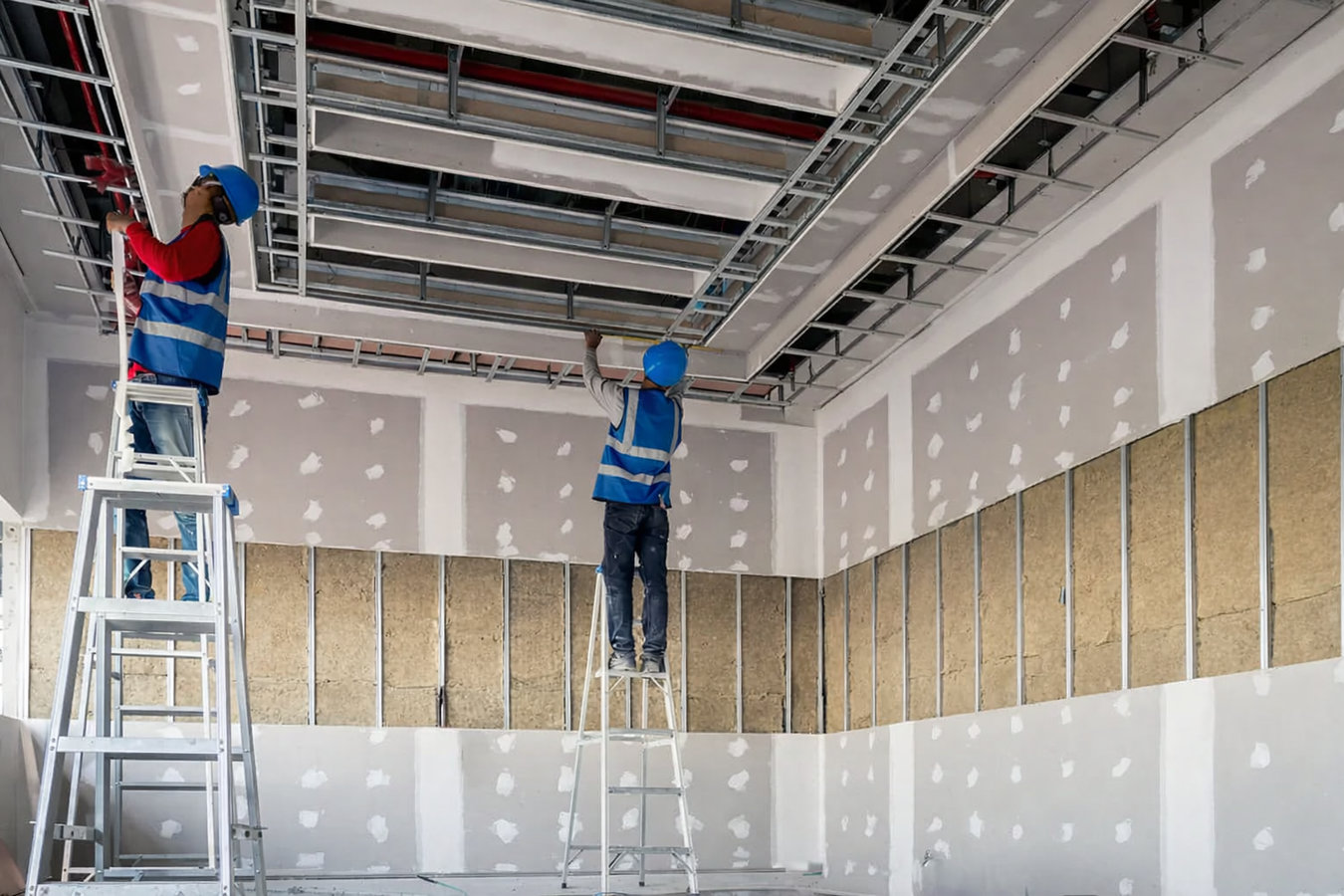
On installation day, the crew works in the identified areas - attic, wall cavities, or mechanical rooms - with protective coverings in place. Most small commercial buildings are done in one to three days. A city inspector signs off after the work is complete, and we walk you through what was installed before we leave.
Free on-site estimate, no obligation. We assess your building, explain what we find, and give you a written quote - before you commit to anything.
(309) 581-0445A lot of Moline commercial buildings along the riverfront and downtown corridors were built before modern energy codes existed - often with minimal insulation in walls and attics. We know how to work in older masonry, steel frame, and mixed construction without causing damage or creating new problems. That experience matters when the building was not built with energy efficiency in mind.
Commercial insulation work in Moline requires a building permit from the City of Moline's Building and Inspections Department. We pull the permit and coordinate the inspection on your behalf. That means the work is on record and independently verified - protecting you if you ever sell, refinance, or face an insurance question about the building.
Commercial buildings have stricter fire safety and code requirements than residential projects, and the contractor you hire needs to understand those differences. We use products rated for commercial use and confirm fire safety compliance before any installation begins.
Every estimate spells out the insulation type, coverage area, installed thickness, and total cost before you sign anything. If the scope changes during the job - for example, if we find unexpected moisture damage - we notify you immediately and get your sign-off before continuing. No surprises at invoice.
Experience with older buildings, transparent pricing, and end-to-end permit management combine to make commercial insulation work predictable and low-stress - which is exactly what a business owner needs when trying to keep operations running.
The North American Insulation Manufacturers Association sets industry standards for commercial insulation installation.
Control ground moisture rising through your building's floor system - an important companion to insulation work in Moline's river-humidity environment.
Learn MoreHigh-performance foam for roof decks, above-grade walls, and any commercial space where air sealing and insulation need to be solved together.
Learn MoreMoline winters do not wait - get your building assessed before the cold season hits and energy costs climb again.