Loading...
Serving Moline, IL and surrounding areas. (309) 581-0445
If your home never quite warms up in winter or the upstairs bakes in summer, your attic insulation is almost certainly the problem. We add the right amount of material, in the right places, for what a Moline winter actually demands.
Attic insulation in Moline, IL works like a thick blanket between your living space and the outdoors - slowing heat movement in winter and blocking radiant heat from baking down through your ceiling in summer, with most jobs on a typical home finished in two to four hours. Without enough of it, your heating and cooling system is fighting a losing battle every month.
Moline's housing stock skews older - many homes were built in the early-to-mid 20th century when attic insulation was minimal or nonexistent by current standards. If you own one of these homes and the attic has never been upgraded, there is a good chance the original material has settled and compressed over the decades, losing the effectiveness it once had. Moline winters average around 14 degrees Fahrenheit in January, and a home with thin attic coverage is paying to heat the outdoors every single month. For attics where air leaks are part of the problem, pairing insulation with attic air sealing delivers the most complete fix.
If your attic needs a full overhaul rather than a top-off, blown-in insulation is the most common material used for topping off existing coverage because it fills gaps and settles into corners without cutting. The ENERGY STAR Seal and Insulate program recommends combining air sealing with insulation for the highest-return upgrade you can make to your home.
If your gas bill climbs sharply from November through March and top-floor rooms never reach a comfortable temperature, your attic insulation is likely the culprit. Heat rises straight through a thin attic floor, and a furnace that runs constantly to compensate is costing you money every day.
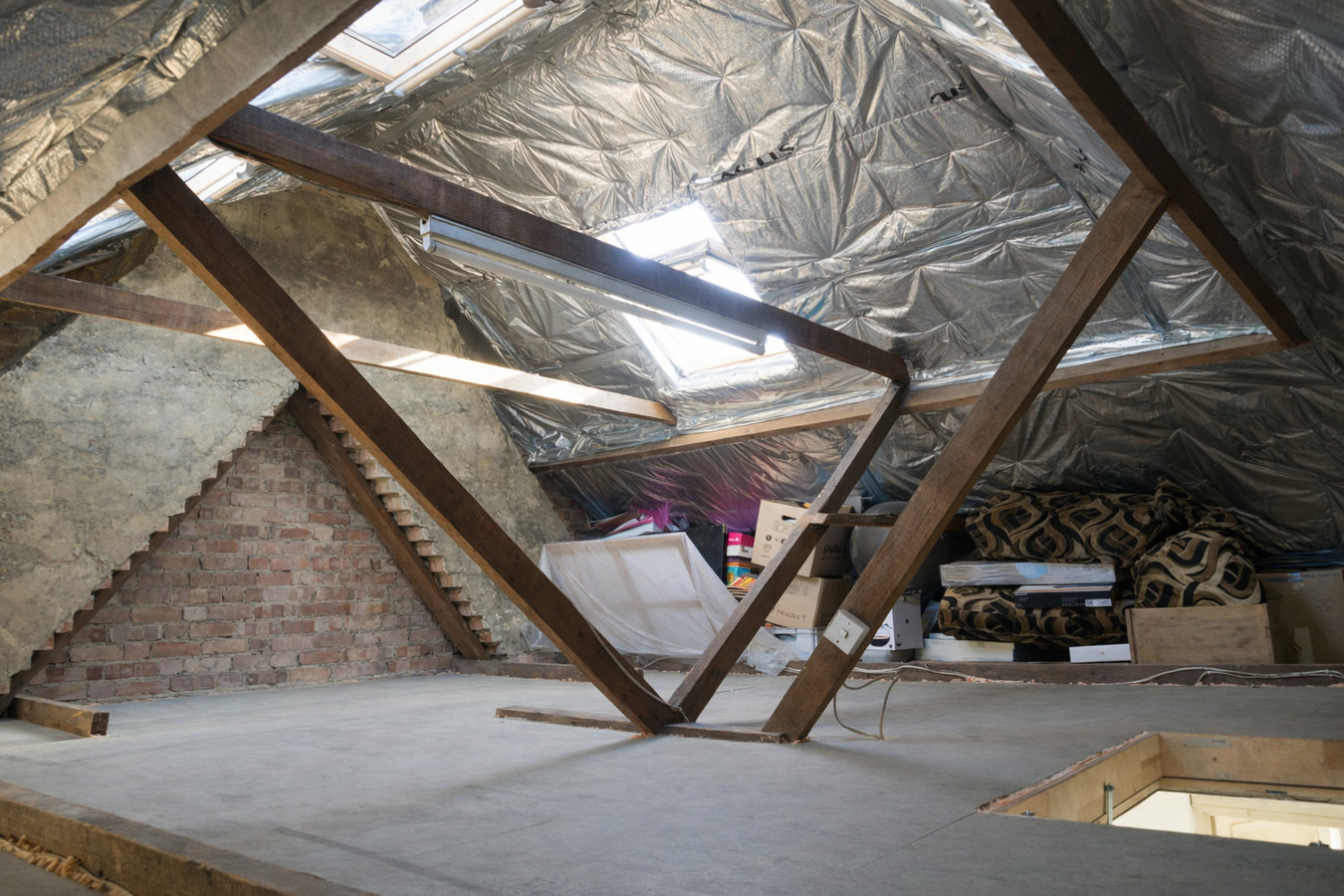
Go up to your attic and look at the floor. If the wooden joists - the parallel beams running across the floor - are visible above the insulation, your coverage is too thin for a Moline winter. A properly insulated attic should have those beams completely buried. This is a five-minute check any homeowner can do.
Ice dams build up along roof edges when heat leaking through the attic melts roof snow, which refreezes at the cold eaves. Moline gets enough snow and freeze-thaw cycles that ice dams are a recurring problem - and they almost always mean the attic needs more insulation and air sealing.
If the second floor or rooms near the ceiling become hard to cool during a Quad Cities summer, heat is radiating down from an under-insulated attic. An attic without adequate insulation can reach very high temperatures, turning your ceiling into a radiant heater. Upgrading the attic insulation is often the most effective fix for this problem.
We handle everything from simple top-offs to full attic overhauls. Before any new material goes in, we check for air leaks around light fixtures, pipes, and the attic hatch and seal them first - skipping that step is one of the most common shortcuts that leads to disappointing results. Every job includes a written quote that spells out exactly what will be done, what materials will be used, and whether attic air sealing is included or priced separately.
For most Moline attic top-offs, blown-in loose fill is the material of choice because it fills irregular spaces and layers evenly over existing material. For new construction or easy-access attics, blown-in insulation in batts or rolls may also be used. If old insulation is wet, moldy, or contaminated, we remove it first and start fresh - adding new material on top of a problem just buries it.
Adding new blown-in material over existing insulation - the most common and affordable option for homes that just need more depth.
Removing old, damaged, or contaminated insulation and installing fresh material from scratch for homes that need a complete reset.
Sealing gaps around fixtures, pipes, and the attic hatch before adding insulation - the combination that delivers the best energy results.
A free on-site visit to measure current coverage, check for moisture, and tell you exactly what your attic needs and what it will cost.
Moline sits in a cold, humid climate zone where average January lows hover around 14 degrees Fahrenheit and extended stretches below freezing run from November through March. The federal government classifies this as a climate zone that demands a high level of attic insulation - and many homes in Moline are running on original material that has settled and compressed over 40 or 50 years. Moline's humid summers add a moisture risk that affects how insulation is installed: a good attic insulation company checks attic ventilation and looks for moisture signs before adding anything new, not just blow in material on top of a problem.
We serve homeowners throughout the Quad Cities area, including East Moline and Bettendorf, where the same older housing stock and climate conditions apply. Both Ameren Illinois and MidAmerican Energy serve the Moline area and offer cash rebates for insulation upgrades - ask us about eligibility when you call for a quote.
We ask a few basic questions about your home - age, whether insulation has been done before, any specific problems you have noticed. We respond within 1 business day and can typically schedule a visit within a few days.
A contractor goes up into your attic, measures the current depth, checks for air leaks and moisture, and confirms ventilation is working. This usually takes 20 to 45 minutes and is always free.
You receive a written estimate listing exactly what will be done, what materials go in, and whether air sealing is included. A verbal number over the phone without seeing your attic is not a real quote.
The crew runs a hose up to the attic from outside and distributes material evenly across the floor. You do not need to leave - most Moline attic jobs are finished in two to four hours, and everything happens above your ceiling.
We respond within 1 business day. Fill out the form and we will schedule a free attic assessment at a time that works for you - no obligation, no pressure.
(309) 581-0445Adding insulation without sealing air leaks first is one of the most common shortcuts that disappoints homeowners. We always check for gaps around fixtures and pipes and include air sealing in the quote - or price it separately so you can see exactly what you are getting.
New insulation that blocks attic ventilation channels can cause moisture problems and shorten the life of your roof. We protect or extend ventilation baffles as part of every job, so the coverage is right without creating a new problem.
We have worked on Craftsman bungalows, Foursquares, and ranch-style homes across Moline - homes with original framing, settled insulation, and the kinds of access challenges that older construction brings. We scope jobs accurately the first time.
If you plan to apply for a utility rebate through Ameren Illinois or MidAmerican Energy, we provide the documentation you need - material type, coverage achieved, and job details. Most contractors know the process; we make sure you do not have to chase it.
Whether your home is on the South Hill, near the older neighborhoods downtown, or on the west side of Moline, we know what attic insulation in this climate actually requires. Any experienced attic insulation company will tell you the same: the material and the depth both have to match the local climate. Call us at (309) 581-0445 for a straight answer on what your attic needs and what it will cost.
The loose-fill material most commonly used for attic top-offs - fills irregular spaces and layers evenly over existing insulation without cutting.
Learn MoreSealing gaps around fixtures, pipes, and the attic hatch before insulation goes in - the step that makes the biggest difference in the final outcome.
Learn MoreWith Moline winters starting in November and utility rebates available right now, there is no better time to find out what your attic needs. Call (309) 581-0445 or submit a request online.