Loading...
Serving Moline, IL and surrounding areas. (309) 581-0445
Cold floors and sky-high heating bills in winter are not something you have to live with. The right basement insulation stops heat from escaping through your foundation and keeps your first floor comfortable all season.
Basement insulation in Moline, IL slows the movement of heat between your living space and the cold ground or outside air below your home - most jobs in an average-sized basement take one to two days. Without it, warmth escapes through your basement walls and floor in winter, making your furnace work harder and your floors feel cold. Adding insulation creates a thermal barrier that keeps heat where you want it.
Moline has a large share of homes built before 1960, and most of them were never insulated below grade. If your first floor feels cold no matter how long the furnace runs, or if you have been watching your heating bill climb each January, the basement is often the first place to look. Many homeowners are surprised to learn how much heat escapes through uninsulated concrete walls. Pairing basement insulation with proper crawl space insulation covers the full below-grade envelope and gives you the most complete result.
The U.S. Department of Energy recommends insulating basement walls as one of the most effective ways to reduce home heat loss in cold climates like northern Illinois.
If the floors on your main level feel noticeably cold in winter - especially over an unfinished basement - heat is escaping through the floor from below. This is one of the most common complaints from Moline homeowners during the region's hard winters. Adding insulation below typically makes a noticeable difference within the first heating season.
If your gas or electric bills have been rising year over year but your habits have not changed, heat loss through an uninsulated basement is a likely cause. Moline winters are long, and an uninsulated basement can account for a significant share of your home's total heat loss. A contractor can assess whether your basement is the main contributor.
A persistent musty odor or white mineral deposits on concrete walls - called efflorescence - signals that moisture is moving through your foundation. This is especially common in Moline homes near the river corridor, where groundwater pressure is higher. These warning signs need to be addressed before insulation goes in.
Homes built before modern energy codes were adopted - which covers a large share of Moline's neighborhoods - were typically built with little or no basement insulation. If your home is more than 40 years old and the basement has never been updated, there is a strong chance you are losing heat and money every winter.
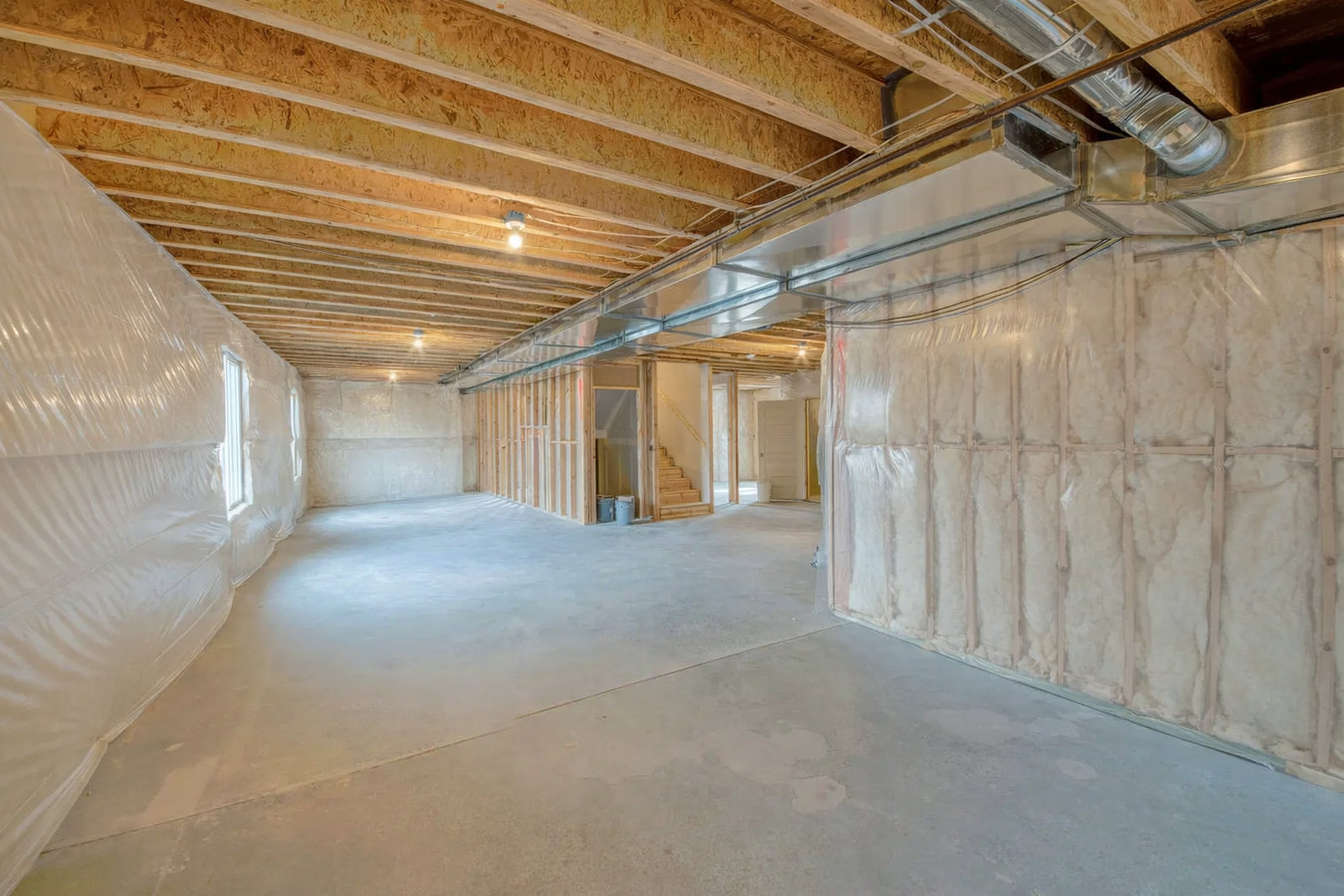
We insulate two primary areas in basements: the perimeter walls and the ceiling above. Wall insulation is the better choice when the basement is finished or intended to be finished - it keeps the below-grade space itself warmer and makes it livable. Ceiling insulation is often used when the basement is strictly storage or mechanical space, where the goal is simply to keep the floors above warmer without conditioning the basement. For walls with irregular surfaces or lots of penetrations around pipes and wiring, we frequently recommend closed-cell foam insulation because it expands to fill gaps and acts as a moisture barrier at the same time.
For basements with standard framed walls, batt insulation - the familiar roll-type material - is a solid, cost-effective option. Before any insulation goes in, we assess the basement for moisture: damp or leaky walls need to be addressed first, because insulating over a moisture problem only makes it worse. Every job starts with an honest assessment of what the space actually needs, and we explain our recommendation in plain terms before anything is scheduled.
Best for finished or soon-to-be-finished basements where you want to condition and use the full space.
Ideal for unfinished basements where the goal is keeping the floors above warmer without heating the lower level.
Suited for older homes with irregular concrete walls, pipe penetrations, or elevated moisture exposure.
A cost-effective option for basements that already have standard framed walls with consistent stud spacing.
Moline regularly sees winter lows below 0 degrees Fahrenheit and summer highs above 90, a swing of nearly 100 degrees across the year. That kind of range means an uninsulated basement is constantly fighting the outdoor temperature in both directions - cold floors and high heating bills in January, and a warm, humid basement in July. A large share of Moline's residential neighborhoods contain homes built before the 1970s, when basement insulation was rarely included in standard construction. If your home was built before 1980, there is a good chance your basement walls have little or no insulation at all.
Moline also sits directly on the Mississippi River, and the water table in many parts of the city is relatively high. Basement moisture - whether from groundwater seeping through walls or humidity condensing on cold surfaces - is a common complaint among homeowners here. Any insulation project should start with a moisture assessment, because insulating a damp wall without addressing the water source causes more problems than it solves. We serve homeowners throughout the area, including Rock Island and Milan, where similar river-corridor conditions apply.
We ask a few basic questions about your basement - finished or unfinished, any moisture history, and when the home was built. We respond within 1 business day and can usually schedule a visit within a few days.
A contractor walks through your basement, checks the walls and ceiling for moisture or air leaks, and measures the space. You receive a written estimate with a clear breakdown of materials and labor - no surprise costs after the fact.
Before the crew arrives, clear the basement of stored items and anything stacked against walls. Your contractor gives you a specific list of what needs to move. This is the main thing on your end, and doing it ahead of time keeps the job on schedule.
Most jobs complete in one to two days. Before the crew leaves, a lead installer walks you through the finished work. If you qualify for Ameren Illinois rebates, we will make sure you have the documentation you need to file your claim.
Free estimate, no obligation. We assess your basement, explain exactly what we recommend and why, and give you a written quote. No sales pressure.
(309) 581-0445We check for water intrusion, efflorescence, and humidity issues before recommending any insulation approach. Installing over a moisture problem creates mold - and we won't let that happen on our watch.
A large share of the homes we work in were built before 1960 - with uneven concrete walls, original plumbing penetrations, and no prior insulation. We know how to work in these spaces and which materials hold up best in them.
Ameren Illinois offers rebates for qualifying insulation upgrades, and many homeowners miss out simply because they did not ask. We check your eligibility before work starts and make sure you have everything needed to claim the money back.
When a permit is required by the City of Moline, we handle pulling it and scheduling the inspection on your behalf. Permitted work is on record - which protects you when you refinance or sell the home down the road.
Every basement job starts with an honest look at what the space actually needs. We explain the tradeoffs between materials, give you a clear written estimate, and do not push you toward options that do not fit your situation.
High-density spray foam that insulates and acts as a moisture barrier - a strong choice for basement walls with irregular surfaces or elevated humidity.
Learn MoreSeals and insulates the crawl space to protect floor joists from moisture and stop cold air from pushing up through your floors.
Learn MoreMoline winters are long - the sooner your basement is insulated, the sooner your floors warm up and your heating bill comes down.