Loading...
Serving Moline, IL and surrounding areas. (309) 581-0445
Most Moline homes lose heat through gaps in the attic floor - around pipes, wires, light fixtures, and wall tops. Sealing those gaps is the fix that insulation alone cannot do.
Attic air sealing in Moline, IL means using foam and caulk to plug every gap in the attic floor where conditioned air escapes - around light fixtures, pipes, wires, chimneys, and the tops of interior walls - and most jobs on a typical Moline home take two to six hours in a single visit. Unlike adding more insulation, sealing stops air movement directly. Insulation slows heat transfer, but it cannot stop air from flowing through an opening. If your attic has gaps, the insulation sitting on top of them does very little.
A large share of Moline homes were built before the 1980s, when air sealing was rarely part of construction. Over decades of settling, renovation, and added plumbing or wiring, dozens of small gaps form in the attic floor. Each one is a path for your heated air in January and your cooled air in July to leave the house. Sealing is the step that makes everything else work better - including the insulation already up there.
Attic air sealing pairs directly with whole-home air sealing services for homeowners who want a complete picture of where their house is losing conditioned air. The U.S. Department of Energy identifies air sealing as one of the highest-return energy improvements a homeowner can make - and the attic is consistently the largest single source of air leakage in older homes.
Ridges of ice that form along your roof edge after a Moline snowfall are a direct sign that warm air is escaping through your attic floor, warming the roof deck, and melting snow that refreezes at the cold eaves. This is not just a winter nuisance - it forces water under your shingles and can cause ceiling leaks. Sealing the attic floor is the fix that addresses the root cause.
If your gas or electric bills have been rising year over year without a change in your habits, air leakage from the attic is one of the most common culprits. In Moline, where heating season runs from October through April, a leaky attic floor compounds into real money every winter. Bills that feel disproportionate to your home size are a reliable signal to have the attic assessed.
A room that stays too cold in February or too stuffy in July often traces back to the attic above it. Air leaks above that space let conditioned air out and pull outdoor air in, making your HVAC fight a losing battle. The room directly below your attic hatch is a common example - if it feels noticeably different from the rest of the house, that is a place to start.
Open your attic hatch or pull down the folding stairs on a cold or windy day. If you can feel a draft or notice the air temperature change noticeably near the opening, the hatch itself is one of the biggest air leaks in the house. Attic hatches are among the most commonly overlooked sealing points, and they are also one of the easiest to fix.
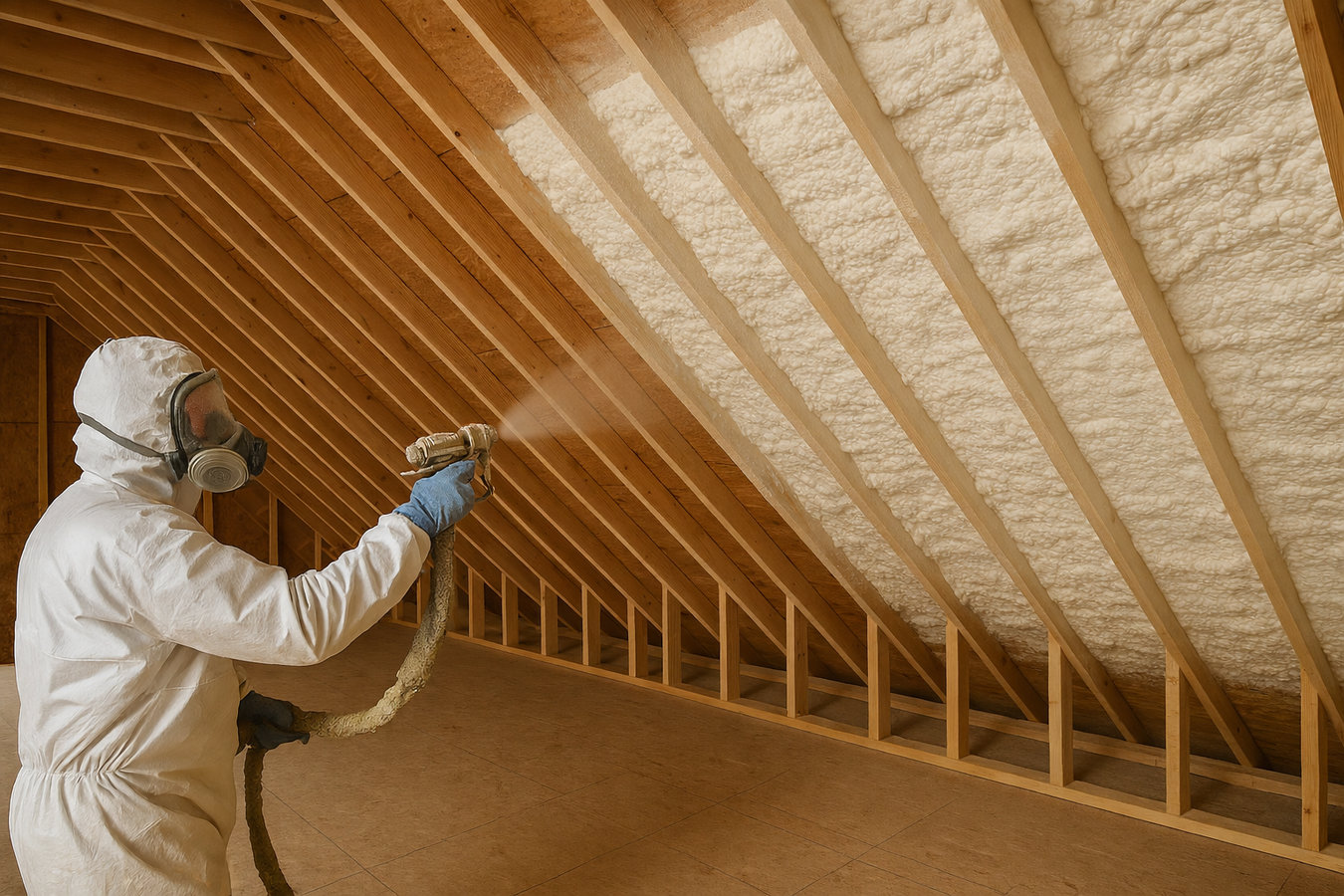
We work through your attic systematically, applying spray foam and caulk to every gap we can find - around recessed light fixtures, plumbing and electrical penetrations, chimney chases, the tops of interior partition walls, and the attic hatch itself. The goal is to close every path where conditioned air can escape. Partial jobs that seal only the obvious penetrations leave most of the leakage problem in place. We do not quote until we have seen the attic, so the scope and price we give you reflect your specific home.
Most homeowners bundle attic air sealing with an insulation upgrade in the same visit. Sealing first, then adding insulation on top, is the order that actually delivers the full benefit of both steps. We also offer standalone sealing jobs for homeowners who already have adequate insulation levels but suspect air movement is still costing them. For homes where the whole-house air leakage picture matters, retrofit insulation combined with sealing is often the right path - and we can assess both in a single visit.
For most Moline homes - foam and caulk applied to all accessible gaps around pipes, wires, light fixtures, chimney chases, and wall tops.
Ideal when the pull-down stairs or hatch cover are a primary air leak point - a quick, high-impact improvement on its own.
For homeowners who want to address both steps in one visit - attic is sealed first, then insulation is added on top for the full thermal benefit.
For homeowners considering an insulation upgrade who want to confirm sealing is included - we assess, seal, and document before any insulation is installed.
Moline sits in a climate where winter temperatures regularly drop below zero and summer heat pushes past 90 degrees Fahrenheit. That 100-plus degree seasonal swing means your attic is under constant pressure - cold air trying to push in all winter, warm humid air from the Mississippi River corridor trying to infiltrate all summer. For homeowners here, a leaky attic is not a minor inconvenience. It is a direct driver of high utility bills in every season. Because a significant share of Moline homes were built between the 1920s and 1960s with no attention to air sealing, most of them have never had a professional sealing job done - decades of settling, renovations, and added plumbing or wiring have only added more gaps over time.
Ice dams are a particular problem in Moline winters, and they are a direct result of warm air escaping through unsealed attic floors. We serve homeowners throughout the Quad Cities, including Rock Island and East Moline, where the same older housing stock and climate conditions create the same pattern of attic air leakage. If you have dealt with ice dams, climbing utility bills, or rooms that never feel comfortable, attic air sealing is almost always part of the answer.
We ask a few basic questions - your home's age, whether you've noticed ice dams or high bills, and what's prompting you to reach out. We reply within one business day and schedule a free on-site assessment. There is no obligation at this stage and no quote until we have seen the attic.
A technician spends real time in your attic before recommending a scope of work. We look at how much insulation is already there, where the gaps and penetrations are, and whether there are moisture or ventilation issues that need to be addressed first. This assessment typically takes 30 to 60 minutes and is free.
We walk you through what we found and what we recommend. This is your chance to ask what will be sealed, how we handle existing insulation, and whether the work qualifies for Ameren Illinois or ComEd utility rebates. We answer clearly and without pressure - no commitment required at this stage.
On the work day, the technician moves through the attic systematically, applying foam and caulk to every gap accessible. Most Moline homes are finished in two to six hours. There is minimal noise and no odors that linger after the foam cures. You can stay home and use your space normally throughout.
Free estimate, no obligation. We assess the attic before quoting and reply within one business day.
(309) 581-0445Homes built in Moline before 1980 have specific air leakage patterns - old plumbing chases, knob-and-tube wiring paths, and framing gaps that are different from what you find in newer construction. We know what to look for in mid-century Moline homes and come prepared to address the penetrations that matter most.
We do not quote air sealing from a phone call or a photo. Every estimate starts with someone in your attic, looking at every penetration. What we quote reflects what your home actually needs - not a standard package. That means no scope creep after the work starts.
Ameren Illinois and ComEd both offer rebates for qualifying air sealing work, and the federal energy efficiency tax credit can also apply. We walk you through what is available before the job starts so you know your real out-of-pocket cost. The ENERGY STAR program sets the performance standards that most rebate programs reference - and we document the work to those standards.
Attic air sealing is the most effective long-term solution for ice dams, which are a recurring problem in Moline. We seal the gaps that let warm air escape and heat your roof deck - the root cause of ice formation at the eaves. Homeowners who have dealt with chronic ice dams see a real reduction after a thorough sealing job.
Every attic air sealing job we complete starts with an honest assessment and ends with clear documentation you can use for rebate applications. We are local, we know the conditions here, and we stand behind the work.
Add insulation to an already-built Moline home - walls, attic, or crawl space - without major renovation using blown-in or injection methods.
Learn MoreWhole-home air sealing that covers the attic, basement rim joists, and other major leakage points for a complete thermal envelope improvement.
Learn MoreMoline winters move fast. Book your free attic assessment now and head into the cold months with a tighter, more efficient home.